



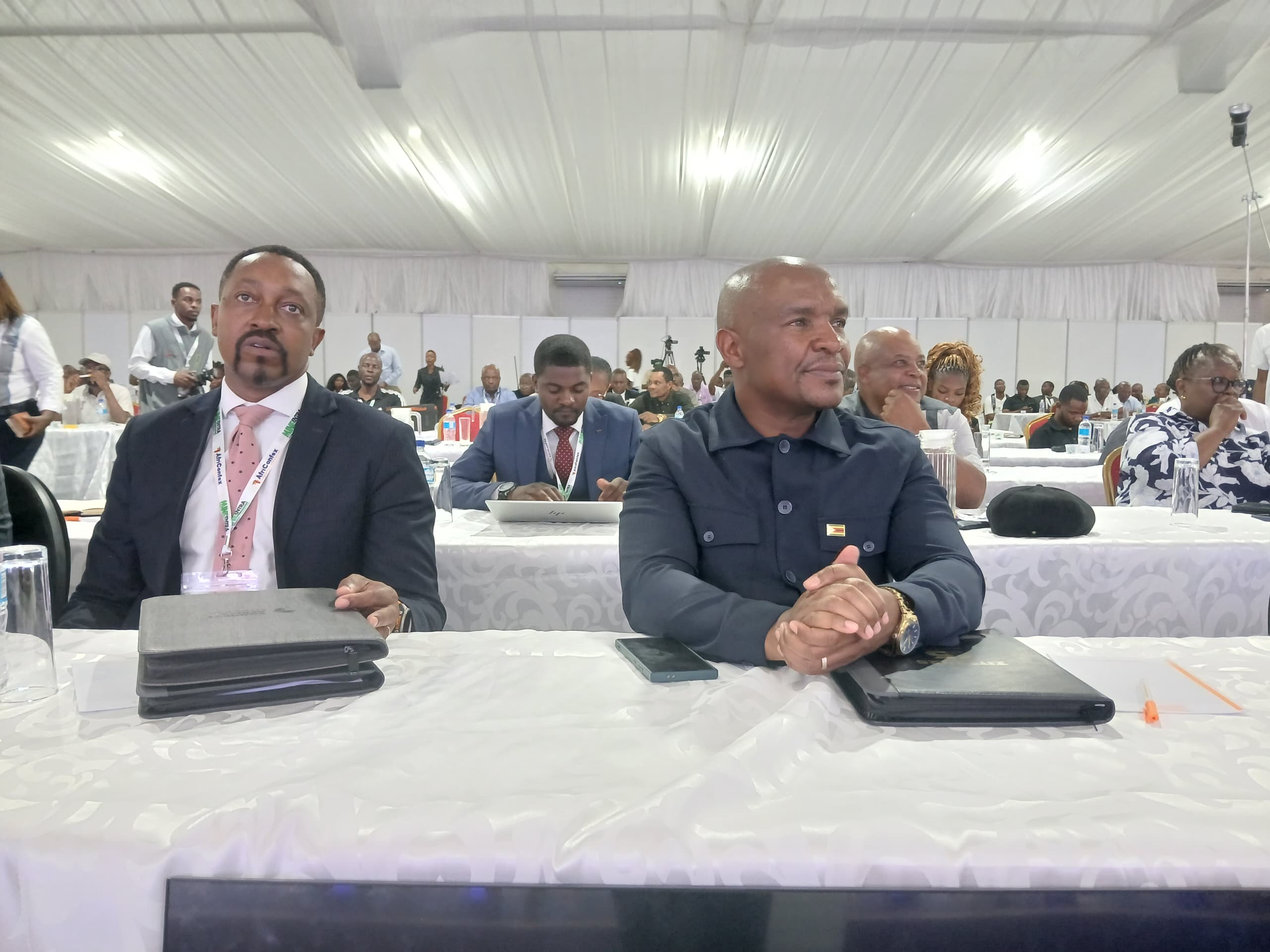
The 3rd Edition of the Africa Infrastructure & Built Environment Confex (AfriConfex) Conference and Exhibition2025 has kicked off today at the Zimbabwe International Trade Fair (ZITF) grounds in Bulawayo.
The conference is running concurrently with the 28th edition of MineEntra 2025, scheduled from October 8-10, 2025, at the same venue.
AfriConfex, running under the theme “Smart Moves: Powering Zimbabwe’s Infrastructure Evolution,” has attracted exhibitors from various sectors, including contractors, civil engineers, consultants, developers, and many others.
In his keynote address, Minister of Transport and Infrastructural Development, Hon Felix Tapiwa Mhona, who officially opened the 2025 Expo, stated that infrastructure is a key ingredient for sustainable development, emphasizing its crucial role in driving economic growth and transformation.
“Infrastructure is a key ingredient for sustainable development. All countries need efficient transport, housing, sanitation, energy and communications systems to prosper and provide a decent standard of living for their populations. On the other hand, insufficient or poor infrastructure limits citizens’ access to markets, as well as livelihood opportunities and services such as clean water, education, health, transport and communication. Overall, poor infrastructure can slow economic growth and increase poverty and inequality.
“It is apparent that infrastructure development is a prerequisite for poverty alleviation and employment creation in developing countries such as Zimbabwe. Well-developed infrastructure ensures better living conditions for the general population and improves the competitiveness of private businesses. In addition to the output and productivity effects, infrastructure investment directly and indirectly creates more jobs than other types of investments,” said Hon Mhona.
The minister highlighted that several factors have been affecting the infrastructure sector of late in the country and commended the Second Republic for developing a blueprint to upgrade infrastructure development.
“For far too long, the performance of our infrastructural sector in Zimbabwe had declined due to many factors including lack of an integrated approach in infrastructure investment planning
inadequate funding for maintenance and rehabilitation, low investment in infrastructure from both public and private sector; inadequate funding for capital and operating expenditure; capacity constraints due to migration of skilled personnel; procurement delays; and
poor contract management.
“To turn the tide, corrective measures were instituted under the visionary leadership of His Excellency, the President of the Republic of Zimbabwe, Cde Dr. E.D. Mnangagwa, when Zimbabwe launched a new development trajectory of achieving an Upper Middle-Income Society by 2030 to empower its citizens. Vision 2030, currently implemented within the framework of our seminal economic blueprint, National Development Strategy 1, which shall continue as NDS 2 in a few months to come, recognises that efficient infrastructure delivery will be key in the realisation of National Priorities and overall socio-economic development. Thus, the country targets the restoration of basic infrastructure services such as roads, energy, transport, water and sanitation, technology and Housing,” he said.
He applauded the participants and exhibitors at this year’s AfriConfex, saying he was really impressed by the diverse innovation and creativity displayed when he toured the stands.
ZITF Board Chairman, Mr. Busisa Moyo, also emphasized that infrastructure is a key pillar in achieving Vision 2030, underscoring its critical role in the country’s development aspirations.
“Here in Zimbabwe, our national ambition, articulated in the National Development Strategy 1 (NDS1), places infrastructure development as a key pillar for achieving an upper-middle-income economy by 2030. The progress recorded is commendable and visible: the transformative upgrade of the Beitbridge-Harare-Chirundu Highway, for instance, is not merely a road project; it is an economic corridor that facilitates regional trade via the North-South corridor, significantly reducing transit times and enhancing logistical efficiency across SADC. Similarly, investments in water security, such as the Gwayi-Shangani Dam construction project, are critical, multi-generational interventions that will unlock millions of hectares of arable land for irrigation-based, climate-resilient agriculture,” said Mr Moyo.
Mr. Moyo said that the nature of the challenge is changing, noting that infrastructure today must be digital, green, and resilient.
“However, the nature of the challenge is changing. Infrastructure today must be digital, green, and resilient. A ‘Smart Move’ now means ensuring that every new power plant incorporates renewable energy sources, that every road is built with climate change resilience in mind, and that our built environment leverages Fourth Industrial Revolution (4IR) technologies—from smart grids and Building Information Modelling (BIM) to digital municipal management systems. We are here today to move decisively beyond simply identifying the gaps. We are here to focus on the ‘Smart Moves’ – the innovative, financially sustainable, and technology-driven solutions -required to power a truly modern and resilient Zim,” he said.
The conference will provide the platform and distinctive opportunities for knowledge exchange, business expansion, networking and learning.
The expo was co-organized by the Zimbabwe International Trade Fair (ZITF) and the Ministry of Transport and Infrastructural Development.
Thevhayeya.com to the World🌍
Story by Jeremiah Gora
