



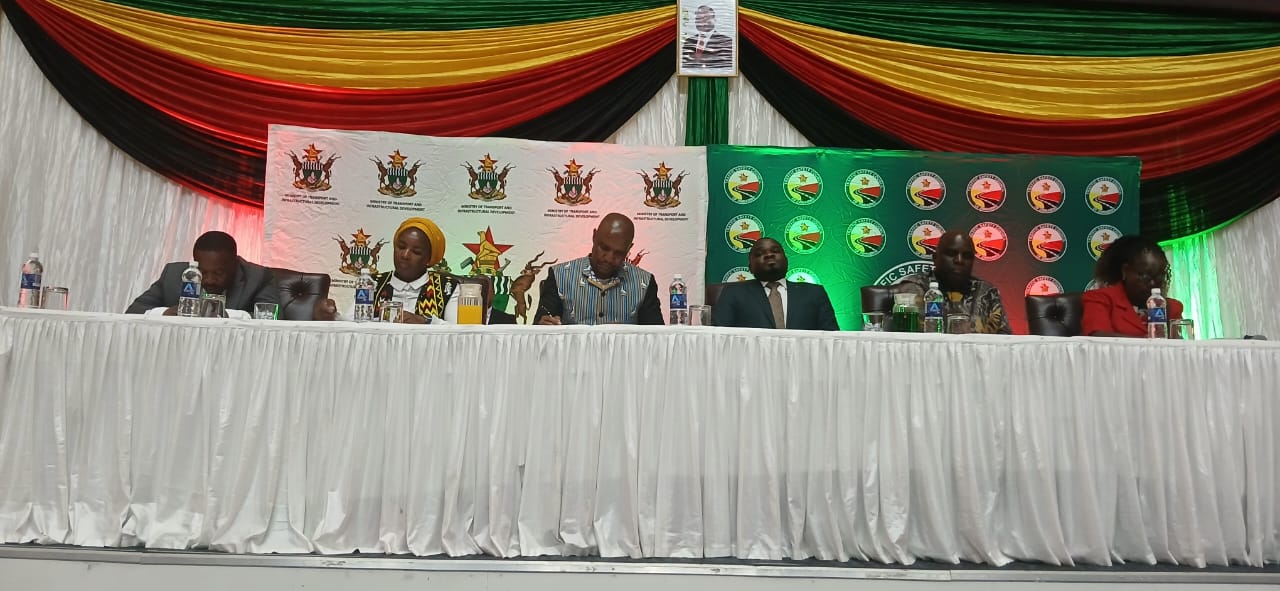
Government has intensified efforts to overhaul Zimbabwe’s post-crash management system, with the proposed Road Accident Fund (RAF) Bill expected to be enacted by the end of the second quarter of the year, Minister of Transport and Infrastructural Development Hon Felix Tapiwa Mhona has said.
Speaking during public consultations on the RAF Bill in Harare today, Minister Mhona said the proposed legislation was a critical response to the country’s escalating road traffic accidents, which he described as a national scourge claiming thousands of lives annually.
“A traffic crash occurs every 15 minutes in Zimbabwe. Over 35 000 crashes occur every year, at least five people die every day, and more than 1 800 lives are lost annually,” Hon Mhona said, citing findings from the Road Safety Performance Review launched by President Emmerson Mnangagwa in January 2022.
The minister said Government was determined to move away from business as usual by introducing decisive policy, legal and administrative reforms aimed at strengthening road safety management and post-crash response systems.
He said the RAF Bill seeks to establish a robust, non-fault-based social safety net that will provide immediate assistance to road crash victims, including evacuation, medical care, rehabilitation and funeral expenses, regardless of who caused the accident.
A key focus of the proposed law is improving emergency response during the “golden hour”, the critical first 60 minutes after a road accident, which Hon Mhona said remains one of the country’s weakest links in saving lives.
“The rapid response and evacuation of victims within the golden hour can significantly increase survival rates and reduce long-term complications. The Road Accident Fund is designed to bridge this gap,” he said, adding that the deployment of ambulances during the 2025 festive period had already demonstrated the effectiveness of coordinated response mechanisms.
Minister Mhona said the Bill aligns Zimbabwe with regional peers such as South Africa, Botswana and Namibia, which already operate similar road accident funds.
Under the proposed framework, 35 percent of the compulsory third-party motor vehicle insurance premium will be allocated to the Road Accident Fund, while 34.3 percent will remain with the insurance industry to cover vehicle damage and related claims.
The remaining portion continues to cater for brokerage fees, road safety awareness, stamp duty and regulatory oversight.
Currently, motorists pay US$35.65 for third-party insurance, with 69.3 percent retained by insurance companies.
He said the new model would ensure a fairer sharing of the burden between Government and insurers, while cushioning the public.
He added that Government was also considering alternative funding sources for the Fund, including fuel levies, tobacco and alcohol products, vehicle imports, spare parts and traffic fines, following proposals raised during earlier consultations.
The minister stressed that the Road Accident Fund would operate alongside broader legislative reforms in the road safety sector, including strengthening the Traffic Safety Council of Zimbabwe with enforcement powers, digitising road traffic management systems, introducing penalty points for errant drivers, and tightening regulations on driving schools and public service vehicle operators.
Hon Mhona said the consultations, conducted in nine provinces were meant to ensure that citizens and all stakeholders contribute meaningfully to shaping the Bill before it is tabled in Parliament.
“Road safety is everyone’s responsibility. Your contributions are indispensable in developing legislation that will save lives and ensure no one is left behind,” he said.
He said the proposed reforms support Zimbabwe’s Vision 2030 and the National Development Strategy, which aim to create a safe, inclusive and efficient transport system as part of building an upper middle-income economy.
Thevhayeya.com to the world.
Story by Jeremiah Gora
