



Story by Vongai Masuka
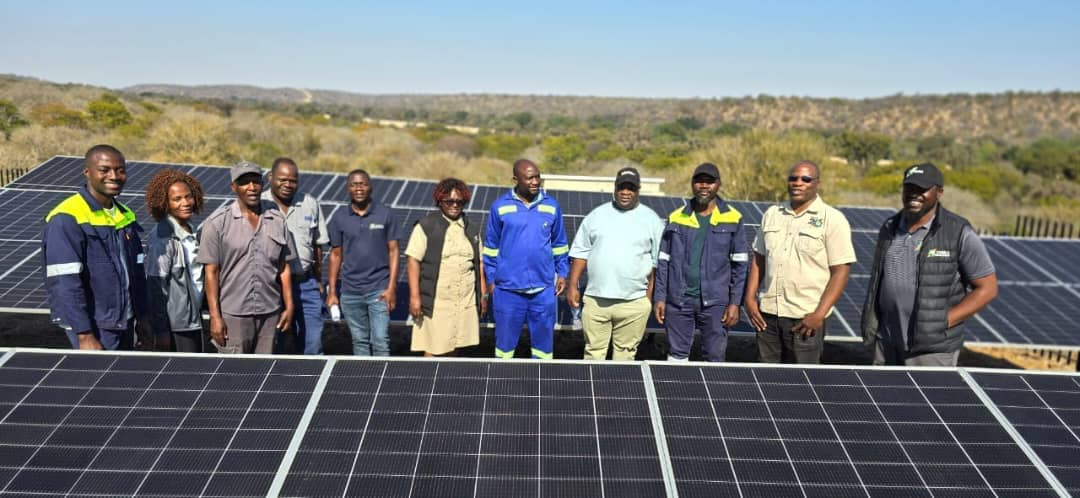
The Zimbabwe Revenue Authority (ZIMRA) has switched on a 40 kVA solar power system at the newly upgraded Mlambapele Border Post, marking a major step toward reliable, sustainable energy at the Zimbabwe-Botswana crossing.
The system, comprising 68 solar panels rated at 585 watts each, was supplied and installed by Sypremo Investments.
Thirty-six panels serve the border post itself, while the remaining 32 power the adjacent Staff Accommodation.
Speaking on the installation, ZIMRA Engineering Department official Denford Munemo said the system was built to keep the new facility running without interruption.
“The 40 kVA solar system provides an efficient and reliable source of electricity for the newly constructed border post and Staff Accommodation,” Munemo said.
“Its solar generation and battery-storage capacity will help minimise power interruptions, support continuous border operations and reduce dependence on conventional energy sources,” He added.
Combined, the panels generate an installed capacity of approximately 39.78 kilowatts peak, 21.06 kWp from the border post array and 18.72 kWp from the staff quarters installation.
Backing up the border post is a battery bank of five 48-volt, 200-ampere-hour units, giving a combined nominal storage capacity of 48 kilowatt-hours to keep power flowing when sunlight is limited.
ZIMRA said the reliable electricity supply will directly benefit border operations, powering processing equipment, communication systems and lighting while also easing the daily lives of officers stationed at the remote post.
The authority framed the project as part of a broader push toward environmentally responsible operations, noting that cutting reliance on diesel generators and the national grid supports its Environmental, Social and Governance goals by lowering fossil-fuel use and greenhouse gas emissions.
Mlambapele Border Post lies roughly 130 kilometres southwest of Gwanda, linking Zimbabwe’s Manama community with Mabolwe in Botswana.
The crossing serves traders and residents on both sides of the border, facilitating the movement of people and goods between the two communities.
